Fort Worth Mobile Mechanic FAQ
People Also Ask About
Mobile Mechanics
Get real answers to the most common questions Fort Worth drivers ask about mobile mechanics, auto repair costs, diagnostics, batteries, alternators, brakes, no-start problems, warranties, and on-site vehicle repairs.
No Towing • No Waiting Rooms • Professional Auto Repair That Comes To You
Quick Navigation
Browse Popular Topics
Looking for a specific answer? Explore the categories below or ask our team your own question.
Cost Questions
Mobile mechanic pricing, diagnostic fees, repair costs, and service call questions.
Repair Questions
What a mobile mechanic can repair, diagnose, replace, and service on-site.
Car Won't Start
Dead batteries, starters, alternators, no-start problems, and diagnostics.
Battery & Alternator
Battery failures, charging system problems, alternator issues, and warning lights.
Trust & Warranty
Warranty, professionalism, mobile mechanic trust, and service expectations.
❓Ask Your Own Question
Don’t see your question? Ask our team directly and choose how you want us to respond.
For urgent questions, call or text (817) 585-8607.
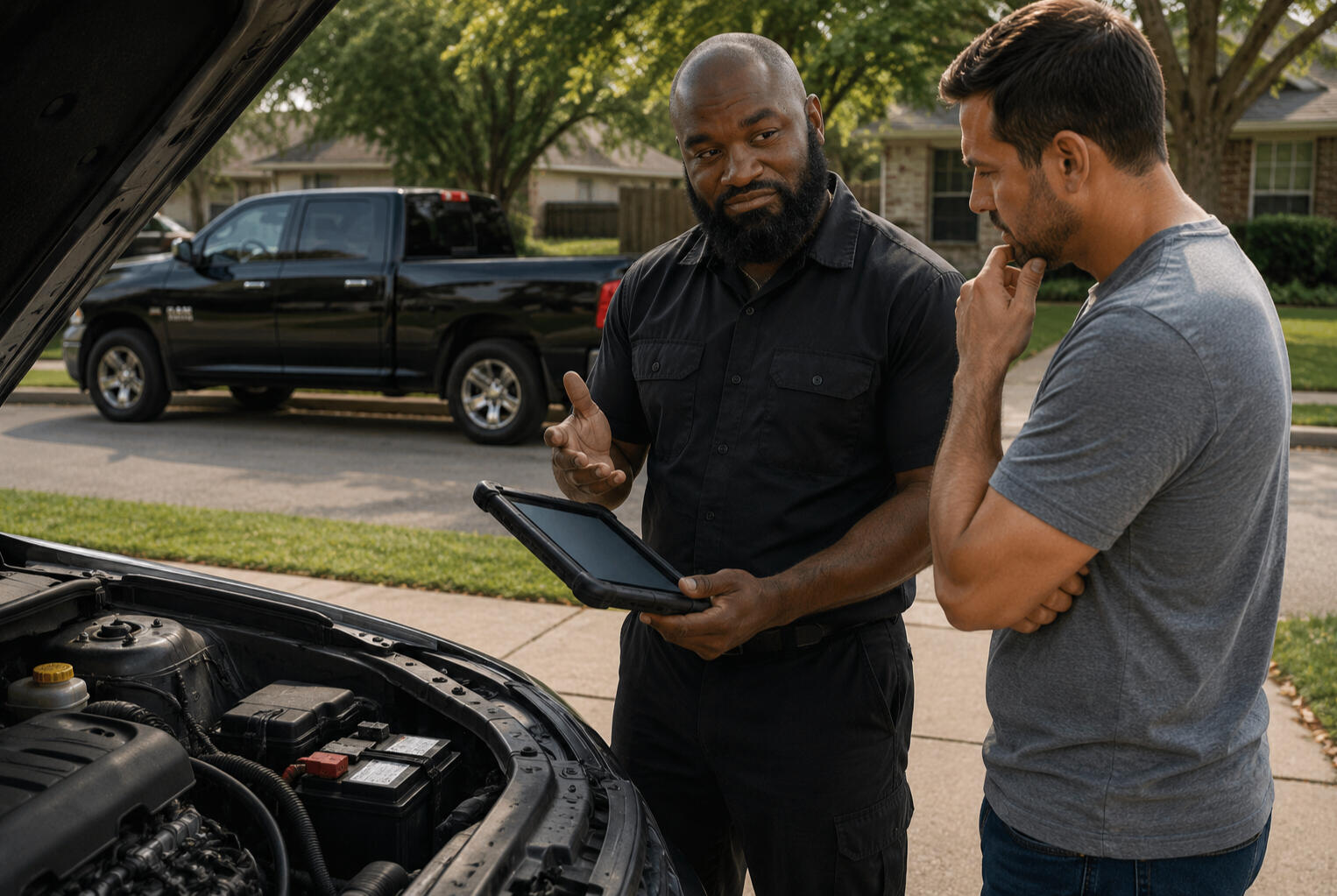
Google People Also Ask
Common Questions About Mobile Mechanics
These are some of the most common questions drivers ask before hiring a mobile mechanic. Click any question below to reveal the answer.
How Much Do Mobile Mechanics Usually Charge?
Mobile mechanic pricing depends on the repair being performed, vehicle make and model, parts required, and the amount of labor involved. Mobile service often saves customers money by eliminating towing costs and reducing repair shop overhead. Fort Worth Auto Repair Mobile Mechanics provides upfront pricing before repairs begin.
How Much Is A Mobile Mechanic Service Call?
Diagnostic pricing varies depending on the vehicle and concern being diagnosed. Our mobile diagnostic service starts at $125 and is applied toward the repair when completed within 14 days. We perform diagnostics at homes, workplaces, apartment complexes, and roadside locations throughout Fort Worth.
Is A Mobile Mechanic Cheaper Than A Repair Shop?
In many situations, yes. Mobile mechanics often have lower operating costs and can save customers money by eliminating towing expenses and reducing downtime associated with dropping off and picking up a vehicle.
Is A Mobile Mechanic Worth It?
For many vehicle owners, mobile auto repair provides significant convenience by bringing diagnostics and repairs directly to their location. Customers can avoid towing costs, waiting rooms, and time away from work or family responsibilities.
What Are The Drawbacks Of Using A Mobile Mechanic?
Some repairs that require alignment racks, tire mounting equipment, machine shops, or vehicle lifts may need to be completed at a repair facility. However, many common diagnostics, maintenance services, and repairs can be completed on-site.
What's It Called When A Mechanic Comes To You?
A mechanic who travels to your location is commonly known as a mobile mechanic. Mobile mechanics perform diagnostics, maintenance, and repairs at homes, offices, parking lots, apartment complexes, and roadside locations.
How Can You Tell If A Mechanic Is Good?
A reputable mechanic should provide accurate diagnostics, clear communication, transparent pricing, warranty coverage, professional service, and positive customer reviews. Experience and honesty are key factors when choosing an automotive repair provider.
Are Mobile Mechanics Legitimate?
Yes. Professional mobile mechanics use many of the same diagnostic tools, repair procedures, and replacement parts used by traditional repair shops while providing the convenience of on-site service.
Do Mobile Mechanics Offer Warranties?
Yes. Most qualifying repairs performed by Fort Worth Auto Repair Mobile Mechanics include a 12-Month / 12,000-Mile Labor Warranty for added peace of mind.
Can A Mobile Mechanic Diagnose A Check Engine Light?
Yes. Mobile mechanics can use professional diagnostic equipment to retrieve trouble codes, analyze live vehicle data, and perform testing to identify the cause of a check engine light. Proper diagnostics help determine whether the issue is minor or requires immediate repair.
Do Mobile Mechanics Bring Their Own Tools?
Yes. Professional mobile mechanics arrive with diagnostic equipment, specialty tools, hand tools, testing equipment, and many commonly used supplies needed to perform diagnostics and repairs at your location.
Can A Mobile Mechanic Replace Brakes At My Home?
In many cases, yes. Mobile mechanics can often replace brake pads, brake rotors, brake calipers, and perform brake inspections at your home, workplace, apartment complex, or other approved location.
Can A Mobile Mechanic Work In An Apartment Parking Lot?
Often, yes. Many diagnostics and repairs can be performed in apartment parking lots with property approval when required. Customers should verify any community rules or restrictions before scheduling service.
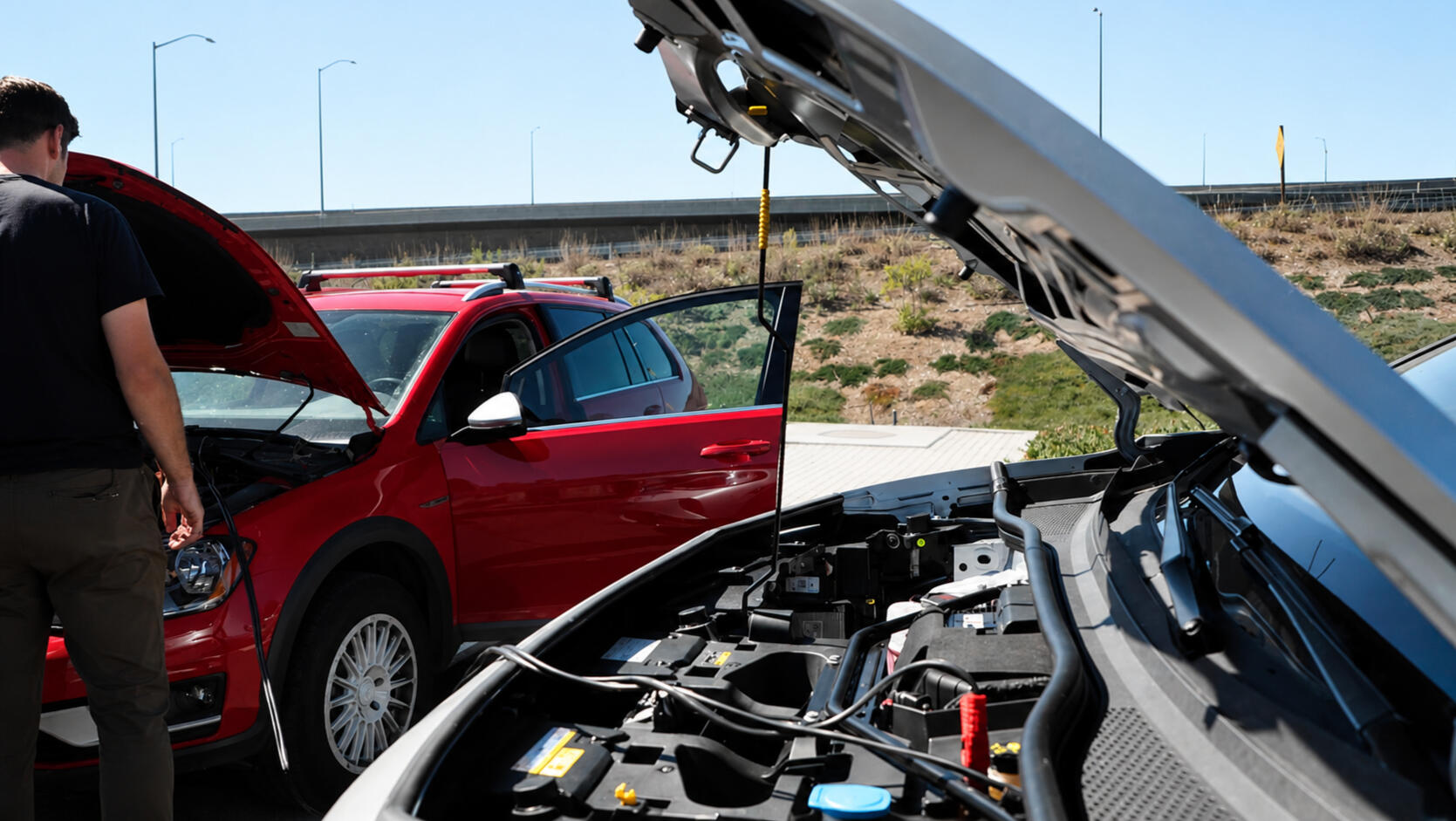
Car Won't Start?
Common No-Start Questions
A vehicle that won't start can be caused by a weak battery, failed alternator, bad starter, fuel issue, ignition problem, or electrical fault. Explore the most common no-start causes below.
Battery Problems
Dead battery, slow cranking, repeated jump starts, clicking noises, and mobile battery testing or replacement.
Alternator Problems
Battery keeps dying, battery light on, dim lights, charging system problems, and mobile alternator diagnostics.
Starter Problems
Single click, no crank, intermittent starting, starter motor failure, and professional starter diagnostics and replacement.
No-Start Diagnostics
Professional testing to identify whether the issue is battery, starter, alternator, fuel, ignition, or electrical related.
Why won't my car start?
A vehicle may fail to start because of a dead battery, weak battery, failed starter, bad alternator, fuel system issue, ignition problem, blown fuse, faulty sensor, wiring problem, or another electrical fault. Proper no-start diagnostics help identify the actual cause before parts are replaced.
Why does my battery keep dying?
A battery may keep dying because of age, extreme heat, loose or corroded terminals, parasitic battery drain, poor ground connections, or a failing alternator that is not properly recharging the battery while the vehicle is running.
Can a mobile mechanic fix a car that won't start?
Yes. A mobile mechanic can perform no-start diagnostics at your home, workplace, apartment complex, parking lot, or roadside location. Many no-start issues involving batteries, starters, alternators, fuses, wiring, sensors, and ignition components can be diagnosed and repaired on-site.
Can a bad alternator kill a battery?
Yes. A failing alternator can prevent the battery from charging properly while the engine is running. When that happens, the vehicle may rely on battery power until the battery becomes weak or completely discharged, causing repeated jump starts or a no-start condition.
How do I know if I need a starter or battery?
A weak battery may cause slow cranking, dim lights, clicking noises, or repeated jump starts. A failing starter may cause a single click, no crank, intermittent starting, or no response when turning the key. Testing the battery, starter circuit, and charging system is the best way to identify the correct repair.
What Can A Mobile Mechanic Fix?
Mobile Auto Repair Services We Perform
Many vehicle repairs can be completed at your home, workplace, apartment complex, parking lot, or roadside location. Explore some of our most requested mobile mechanic services below.
Brake Repair
Brake pads, brake rotors, brake calipers, brake fluid leaks, and complete brake system diagnostics.
Suspension Repair
Control arms, ball joints, sway bar links, shocks, struts, and suspension diagnostics.
A/C Repair
Warm air, weak airflow, compressor problems, cooling fan issues, and A/C diagnostics.
Electrical Repair
Wiring issues, switches, sensors, relays, lighting problems, and electrical diagnostics.
Cooling System Repair
Radiators, thermostats, water pumps, coolant leaks, overheating concerns, and cooling system repairs.
Engine Repair
Spark plugs, ignition coils, valve cover gaskets, motor mounts, sensors, and engine diagnostics.
Steering Repair
Power steering leaks, steering components, tie rods, and steering system diagnostics.
Maintenance Services
Oil changes, filters, tune-ups, fluid services, and scheduled maintenance.
Pre-Purchase Inspection
Comprehensive vehicle inspections before you buy to help identify hidden problems.
Check Engine Light
Warning light diagnostics, fault code testing, drivability concerns, and troubleshooting.
Maintenance Questions
Common Vehicle Maintenance Questions
Preventative maintenance helps extend vehicle life, reduce breakdowns, and catch small problems before they become expensive repairs.
What is the 30-60-90 rule for cars?
The 30-60-90 rule refers to common maintenance intervals around 30,000, 60,000, and 90,000 miles. These services may include fluid changes, spark plugs, belts, filters, brake inspections, coolant service, and other preventative maintenance based on your vehicle manufacturer’s recommendations.
How often should I replace my battery?
Most car batteries last about three to five years, but Texas heat, driving habits, charging system problems, and battery quality can affect lifespan. If your vehicle cranks slowly, needs jump starts, or the battery keeps dying, professional battery testing is recommended.
How often should brakes be replaced?
Brake life depends on driving habits, vehicle weight, road conditions, and brake pad quality. Squeaking, grinding, vibration, longer stopping distance, or a brake warning light are signs your brakes should be inspected before more damage occurs.
When should spark plugs be replaced?
Spark plug replacement intervals vary by vehicle, engine type, and plug design. Worn spark plugs can cause misfires, rough idle, poor fuel economy, hard starts, hesitation, and check engine lights. Always follow your vehicle’s maintenance schedule when possible.
How often should coolant be changed?
Coolant service intervals vary by manufacturer and coolant type. Old or contaminated coolant can contribute to overheating, corrosion, water pump wear, thermostat problems, and radiator issues. If your vehicle is overheating or losing coolant, the cooling system should be inspected.
How often should transmission fluid be changed?
Transmission fluid service intervals depend on the vehicle, transmission type, driving conditions, and manufacturer recommendations. Delayed shifting, rough shifting, slipping, burning smells, or fluid leaks are signs your transmission should be inspected.
Pre-Purchase Vehicle Inspections
Thinking About Buying A Used Vehicle?
A used vehicle may look great on the surface while hiding expensive mechanical, electrical, suspension, cooling system, or transmission problems. A professional pre-purchase inspection can help identify potential issues before you commit to the purchase.
Buy With Confidence
Our mobile mechanics can inspect many used cars, trucks, SUVs, and vans before you buy. We evaluate major vehicle systems, look for signs of costly repairs, identify warning lights, inspect fluid conditions, and help you make a more informed purchasing decision.
🎥 Watch A Real Pre-Purchase Inspection
See an actual vehicle inspection performed by our mobile mechanic before a customer purchased a used vehicle.
Should I get a pre-purchase inspection?
Yes. A pre-purchase inspection can help uncover hidden mechanical problems, fluid leaks, suspension issues, warning lights, cooling system concerns, electrical faults, and other expensive repairs before you purchase the vehicle.
What does a pre-purchase inspection include?
A pre-purchase inspection may include evaluating the engine, transmission, brakes, suspension, steering, cooling system, battery, charging system, warning lights, visible leaks, fluid conditions, tire wear, and overall vehicle condition. Inspection scope may vary depending on the vehicle and location.
Can a mobile mechanic inspect a used car?
Yes. Mobile mechanics can perform pre-purchase inspections at many seller locations, dealerships, private residences, workplaces, and parking lots. This allows buyers to obtain a professional opinion before completing the transaction.
Is a pre-purchase inspection worth it?
In many cases, absolutely. The cost of an inspection is often far less than the cost of unexpected repairs after purchasing a vehicle. Identifying major problems before purchase can help buyers negotiate pricing, avoid costly surprises, or walk away from a bad deal altogether.
Request Vehicle Inspection
Complete the inspection request below. Your email app will open with the request preloaded. Please press send so our team receives it.
Need to send vehicle photos? After submitting, text photos to (817) 585-8607.
Mobile Mechanic Myths
Common Myths About Mobile Mechanics
Some drivers are still unsure how mobile auto repair works. Tap each truth button below to see the reality behind professional on-site auto repair.
Myth
Mobile mechanics cost more.
Truth
Customers often save money by avoiding towing expenses, repair shop delays, and unnecessary overhead. Mobile service brings diagnostics and repairs directly to your location.
Myth
Mobile mechanics only do small repairs.
Truth
Many diagnostics and repairs can be completed on-site, including batteries, starters, alternators, brakes, suspension repairs, cooling system repairs, and no-start diagnostics.
Myth
Mobile mechanics aren't professional.
Truth
Professional mobile mechanics use advanced diagnostic equipment, quality parts, proper repair procedures, and customer-focused communication just like a traditional repair facility.
Myth
You always need a tow truck if your car won't start.
Truth
Not always. Many no-start problems can be diagnosed where the vehicle is parked, including battery failures, starter issues, alternator problems, blown fuses, and electrical faults.
Myth
Mobile mechanics can't diagnose complicated problems.
Truth
Professional mobile mechanics can perform advanced diagnostics for check engine lights, no-start conditions, charging system problems, electrical concerns, overheating issues, and drivability problems.
Myth
Mobile auto repair is less convenient than going to a shop.
Truth
Mobile auto repair is designed for convenience. Instead of arranging a tow, waiting in a lobby, or leaving your vehicle at a shop, service can often be completed at your home, office, apartment, or roadside location.
Professional Auto Repair Without The Waiting Room
Fort Worth Auto Repair Mobile Mechanics brings professional diagnostics and repairs directly to your home, workplace, apartment complex, or roadside location.
Related Services
Related Mobile Auto Repair Services
Looking for a specific service? Explore some of our most requested mobile mechanic services available throughout Fort Worth and surrounding communities.
Battery Replacement
Dead battery? Repeated jump starts? Mobile battery testing, diagnostics, and replacement at your location.
Alternator Diagnostics
Battery light on? Battery keeps dying? Charging system testing and alternator diagnostics.
No-Start Diagnostics
Professional no-start testing to determine whether the issue is battery, starter, alternator, fuel, ignition, or electrical related.
Brake Repair
Brake pads, rotors, calipers, brake diagnostics, and mobile brake repair services.
A/C Repair
Warm air, poor cooling, compressor issues, cooling fan problems, and A/C diagnostics.
Mobile Auto Diagnostics
Check engine lights, warning lights, drivability concerns, electrical issues, and professional diagnostics.
Need Help With A Different Repair?
Visit our main Fort Worth website to explore additional mobile mechanic services, request a quote, schedule an appointment, or speak directly with our team.
Visit Main Website →